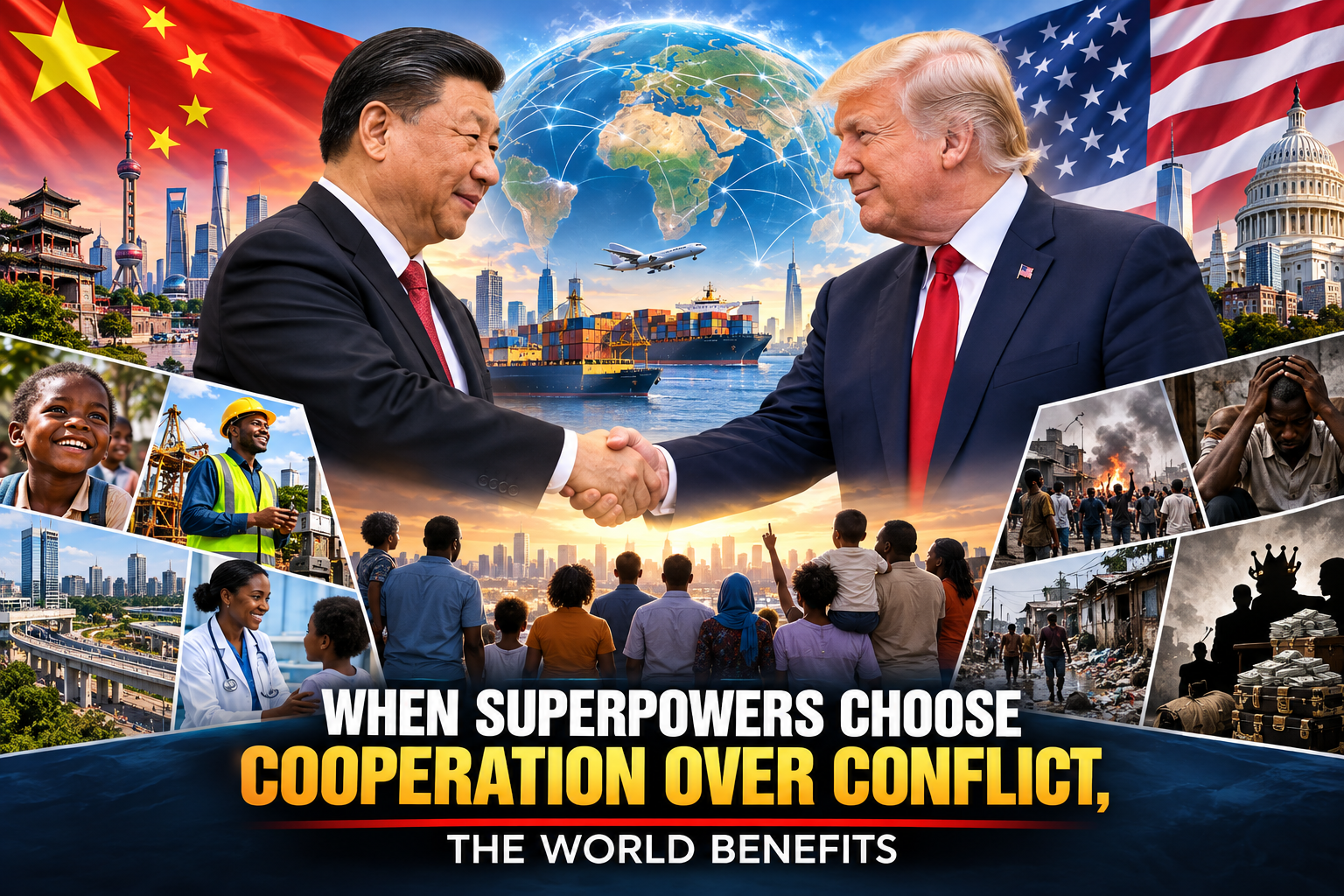
It is encouraging to see the leaders of China and the United States engaging at the highest level. Chinese President Xi Jinping and U.S. President Donald Trump represent two of the world’s most powerful countries, yet their countries do not have to agree on everything to communicate, negotiate, and work toward peaceful coexistence. In September 2026, Xi Jinping traveled to the United States for a state visit at Trump’s invitation, an important example of the value of direct engagement between major powers.
For me, this is something the world should pay attention to.
China and the United States have big differences. They compete economically, technologically and strategically, and disagreements between them can have consequences far beyond their own borders. But competition does not always have to become hostility. Powerful nations can disagree while still recognizing that war, unnecessary confrontation and the destruction of economic relationships can create suffering for ordinary people.
That is why dialogue matters.
When leaders of major powers sit together, talk directly and look for areas of cooperation, they create opportunities to reduce misunderstandings. They can discuss trade, investment, security, technology, international stability, and other issues that affect millions. Even when they cannot agree on everything, maintaining communication is better than letting disagreements grow without dialogue.
The relationship between China and the United States also demonstrates an important principle: countries can put their national interests first without necessarily treating every other country as an enemy.
Both Xi Jinping and Donald Trump have publicly emphasized their respective national interests. The White House describes Trump’s agenda as protecting American interests and strengthening the American economy and national security, while China’s official communications continue to present Xi as China’s president and national leader.
Of course, people will interpret these leaders’ policies and actions differently. Supporters may see their approaches as defending national interests, while critics may disagree strongly with particular policies. That is normal in politics. But beyond political arguments, a broader lesson is worth considering: leaders should never forget the people they were elected or appointed to serve.
A president should think about ordinary citizens.
Are people able to find jobs? Can families afford food? Are children receiving quality education? Are hospitals functioning? Is infrastructure improving? Can businesses grow? Are citizens safe? Is the country’s economy becoming stronger? These questions should remain at the center of national leadership.
This is also where the conversation matters most for Africa.
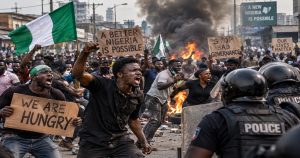
Africa has enormous natural resources, a young population and tremendous potential. Yet many African countries continue to struggle with poverty, unemployment, insecurity, weak institutions, poor infrastructure and economic difficulties. It is therefore understandable that many Africans want leaders who put national development and citizens’ welfare at the center of government.
I would like to see more African governments demonstrate this kind of strong commitment to national development.
Burkina Faso’s current leader, Captain Ibrahim Traoré, is one African leader whose government has placed strong emphasis on national sovereignty, patriotism and domestic development. The official presidency of Burkina Faso identifies Traoré as the country’s president and head of state and continues to publish his government’s programs and activities.
At the same time, it is important not to turn political discussion into blanket judgments about every African leader. Africa is made up of 54 countries, each with different political systems, histories, economic conditions and leadership structures. African leaders, public officials, civil servants, entrepreneurs, and citizens also work every day to improve their countries.
The real issue, therefore, should not simply be about personalities. It should be about leadership standards.
Africa needs leadership that treats public office as a responsibility, not a personal opportunity. Leaders should be judged by what they build, what they improve, and what they leave behind for the next generation.
A country should not be treated as a personal possession.
Its natural resources belong to the nation. Public funds are meant for public purposes. Government institutions should serve citizens. International partnerships should benefit the country rather than create unhealthy dependence. Foreign investment should contribute to development, employment and economic growth.
And African countries should be able to trade and cooperate with Europe, America, China, Asia, and the rest of the world while protecting their own interests.
There is nothing wrong with having international partners. In fact, international cooperation can be extremely valuable. The problem arises when national interests are neglected or when relationships with powerful foreign governments and companies overshadow citizens’ needs.
Nigeria, in particular, needs a serious conversation about what responsible leadership should look like. With its enormous population, natural resources, entrepreneurial energy, and strategic importance, Nigeria can play a much larger role in Africa and the global economy.
But potential alone is not enough.
Nigeria needs leadership that listens to its people, respects sound criticism, encourages productive businesses, invests in infrastructure, strengthens education, improves healthcare, supports security and creates an environment where citizens can build meaningful lives.
Citizens should not have to beg their own government for basic opportunities.
The example of major powers maintaining dialogue despite their differences should remind African leaders of something fundamental: leadership is not about winning every argument. It is about building a country.
China and America may compete. They may disagree. Their leaders may face criticism from different groups. But when their governments keep communicating and look for areas where cooperation is possible, the consequences can extend beyond their borders.
The world benefits when powerful countries choose dialogue over unnecessary conflict, cooperation over destruction, and mutually beneficial trade over economic isolation.
Africa deserves the same spirit.
Our continent does not need leaders who simply want to remain in office. Africa needs leaders who want to build institutions that will survive them.
A president’s greatest achievement should not be how long he or she stayed in power. It should be what the country became while they were there.
That is the kind of leadership Africans should demand: leadership that puts citizens first, protects national interests, welcomes constructive partnerships, respects other nations, and leaves the next generation with a stronger country than the one it inherited.
Because at the end of the day, a nation is bigger than its president, bigger than its political party, and bigger than any individual leader.
A good leader should understand that and govern accordingly.